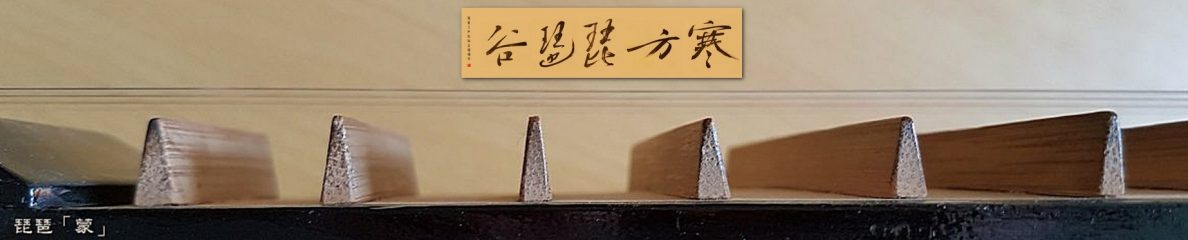
琵琶出音孔的疑問
The soundhole of modern pipa is the smallest among all Chinese pick-string instruments. It is located right behind the lower bridge. That means the sound wave will be blocked or covered by the thickness of the lower bridge. I don’t know when and why modern pipa adopts such a “standard" design. It seems not logical to me.
According to the literature of pipa development from Tang to Qing dynasty, pipa used to have a pair of soundholes, sometimes called the phoenix eyes, which were opened symmetrically on the middle left and right sides of the front surface of the instrument. In order to facilitate the amplifying of sound wave, these soundholes were never blocked by any accessories of the pipa.
There must be some reason for the changes of the number and position of the soundhole of modern pipa. Does anyone know?
 Han Fang Pipa Valley